Há pouco tempo li nas notícias que o Tribunal de Execução de Penas de Lisboa negou liberdade condicional a Vale e Azevedo por, entre outras razões, evidar dar uma “sensação de impunidade, o que comunitariamente é intolerável”. Podem ler a notícia completa aqui.
Ora eu não vou estar aqui a debater se o senhor devia ou não estar preso, já que não tenho nem conhecimento do caso nem competência para o julgar. Sinto no entanto que a razão apontada pelo tribunal para a decisão totalmente inaceitável. Citando o despacho do tribunal, a eventual libertação do ex-dirigente benfiquista tornaria “frustradas as expectativas de comunidade” e “daria uma sensação de impunidade, o que comunitariamente é intolerável”. Basicamente, o que o tribunal está a dizer é que a opinião popular e os julgamentos de rua têm uma palavra a dizer sobre as suas decisões. Isto é, a meu ver, gravíssimo, e espanta-me que nenhuma das notícia que tenha lido sobre o assunto tenha pegado no assunto.
Penso ainda que é um sinal de um problema maior que assola este país (mundo?): a promiscuidade de cargos e poderes. Parece que qualquer pessoa com um cargo com responsabilidade se sente incaçapaz de se limitar ao exercício as funções que lhe competem, sentindo-se obrigado a opinar sobre tudo e mais alguma coisa. Temos assim padres a fazer política, políticos a fazer filosofia e fantasia, jornalistas a fazer um pouco de tudo e sabe-se lá o mais quê. Faz-me lembrar aquelas instituições bancárias que usam figuras conhecidas do mundo do futebol para publicitar os seus produtos.
Agora, uma coisa é opiniar sem autoridade ou conhecimento. Outra é tomar decisões com base em razões erradas ou com poderes que não nos pertencem. Espero sinceramente que tudo não passe de uma infeliz questão de semântica. Mas duvido.
Filipe Baptista de Morais
domingo, 12 de maio de 2013

sexta-feira, 10 de maio de 2013
Lisboa Não É A Cidade Perfeita
Há poucos dias assisti ao concerto dos Deolinda no Coliseu de Lisboa. A vocalista apresentou-se com um visual muito diferente àquele que nos habituou ( já foi a terceira vez que os apanhei ao vivo ), descartando os habituais "vestidos de aldeia" por algo mais clássico. Eventualmente directrizes do novo produtor, ou consequência do recente crescimento internacional. Seja como for é inegávle que o enfoque continua na música, não se podendo confundir os Deolinda com as inúmeras bandas que vivem da sensualidade da vocalista.
Para além das excelentes e Portuguesas melodias (fruto dos talentosos instrumentistas) e da voz de fadista da vocalista (reconheça-se ou não o fado nas suas músicas) há ainda que dar mérito às letras, que do romance ao retrato social são sempre inspiradas e relevantes, não sendo apenas palavras escolhidas pelo seu som bonito. Divertidas perspectivas femininas, retratos da mentalidade tuga ou histórias de amor, é possível encontrar um pouco de tudo nas suas letras. É daí que canções como Pois Foi, Eu Não Sei Falar Amor ou A Problemática Colocação De Um Mastro têm espaço para nascer.
Não pude deixar de estranhar o facto de não cantarem Parva Que Sou, que é actualmente das suas canções mais populares e com receção mais efusiva do público. Na altura ocorreu-me que provavelmente pretendiam afastar-se um pouco do tumulto gerado em volta dessa canção, que já muitas vezes vem sendo utilizada como símbolo de uma tal revolução para acontecer. Creio que os Deolinda sentem que a sua canção está a ser mal interpretada e e explorada para fins com os quais não se identificam. Uma curta entrevista aos membros da banda que li posteriormente veio corroborar esta tese.
Como já vem sendo hábito nos concertos a que assisto, os artista decidiram não cantar uma canções que mais esperava ouvir. Neste caso falo de (Ainda Bem Que) Lisboa Não É A Cidade Perfeita. Sendo o concerto na cidade capital, fiquei de facto espantado por a omitirem no repertório.
Lisboa pode não ser a cidade perfeita. mas também não é má de todo. Foi já considerada como o melhor destino turístico para 2013, e não podemos atribuir o galardão unicamente aos baixos preços praticados em solo Português. É inegável que a cidade tem um encanto próprio muito especial. Recentemente decidi (voltar a) ser turista na minha própria cidade, de modo a re-descobrir os seus atractivos. Comecei por visitar o Castelo de São Jorge e, comparando com outros pontos turísticos de cidade que visitei recentemente (Bruges/Gent/Antuérpia/Bruxelas, Helsínquia, Oslo ) devo dizer que não lhes fica a dever. Fica a promessa de lá voltar ao pôr do solo, que deve ser realmente espectacular. Entretanto há muito mais para ver, mas tem faltado tempo... mas farei os possíveis para não cair num Movimento Perpétuo Associativo.
Filipe Baptista de Morais
Para além das excelentes e Portuguesas melodias (fruto dos talentosos instrumentistas) e da voz de fadista da vocalista (reconheça-se ou não o fado nas suas músicas) há ainda que dar mérito às letras, que do romance ao retrato social são sempre inspiradas e relevantes, não sendo apenas palavras escolhidas pelo seu som bonito. Divertidas perspectivas femininas, retratos da mentalidade tuga ou histórias de amor, é possível encontrar um pouco de tudo nas suas letras. É daí que canções como Pois Foi, Eu Não Sei Falar Amor ou A Problemática Colocação De Um Mastro têm espaço para nascer.
Não pude deixar de estranhar o facto de não cantarem Parva Que Sou, que é actualmente das suas canções mais populares e com receção mais efusiva do público. Na altura ocorreu-me que provavelmente pretendiam afastar-se um pouco do tumulto gerado em volta dessa canção, que já muitas vezes vem sendo utilizada como símbolo de uma tal revolução para acontecer. Creio que os Deolinda sentem que a sua canção está a ser mal interpretada e e explorada para fins com os quais não se identificam. Uma curta entrevista aos membros da banda que li posteriormente veio corroborar esta tese.
Como já vem sendo hábito nos concertos a que assisto, os artista decidiram não cantar uma canções que mais esperava ouvir. Neste caso falo de (Ainda Bem Que) Lisboa Não É A Cidade Perfeita. Sendo o concerto na cidade capital, fiquei de facto espantado por a omitirem no repertório.
Lisboa pode não ser a cidade perfeita. mas também não é má de todo. Foi já considerada como o melhor destino turístico para 2013, e não podemos atribuir o galardão unicamente aos baixos preços praticados em solo Português. É inegável que a cidade tem um encanto próprio muito especial. Recentemente decidi (voltar a) ser turista na minha própria cidade, de modo a re-descobrir os seus atractivos. Comecei por visitar o Castelo de São Jorge e, comparando com outros pontos turísticos de cidade que visitei recentemente (Bruges/Gent/Antuérpia/Bruxelas, Helsínquia, Oslo ) devo dizer que não lhes fica a dever. Fica a promessa de lá voltar ao pôr do solo, que deve ser realmente espectacular. Entretanto há muito mais para ver, mas tem faltado tempo... mas farei os possíveis para não cair num Movimento Perpétuo Associativo.
Filipe Baptista de Morais
sábado, 4 de maio de 2013
Corrida do 1º de Maio
Competion Name: Corrida do 1º de Maio
Length: 15Km
Data: 1st of May 2013
Minimum Goal: - 1h 15m
Personal Challenge: -1h 00m
Time Record in Similar Competitions: ?
Power Song: ?
Usually I don't time myself in distances other than 10, 21 or 42 Km so I was not entirely sure what my best time was for this kind of race. Still, a couple of exciting 10Km competitions are drawing near and so I wanted to test myself towards that end, thus the challenging time objective. Though I was unable to beat it, I finished the race well ahead of my minimum goal, crossing the line in 1h 05m 17s.
I underestimated the Portuguese weather, and took the awfully wrong decision to being my jacket for this race. I can't help but feel that I could have done better if wearing something cooler. I also underestimated the slopes of Lisbon, and as such the last part of the race (5Km uphill) went much worse than expected. Apart from that everything went smooth and I can't think of anything to single out about the organisation of the event.
Length: 15Km
Data: 1st of May 2013
Minimum Goal: - 1h 15m
Personal Challenge: -1h 00m
Time Record in Similar Competitions: ?
Power Song: ?
Usually I don't time myself in distances other than 10, 21 or 42 Km so I was not entirely sure what my best time was for this kind of race. Still, a couple of exciting 10Km competitions are drawing near and so I wanted to test myself towards that end, thus the challenging time objective. Though I was unable to beat it, I finished the race well ahead of my minimum goal, crossing the line in 1h 05m 17s.
I underestimated the Portuguese weather, and took the awfully wrong decision to being my jacket for this race. I can't help but feel that I could have done better if wearing something cooler. I also underestimated the slopes of Lisbon, and as such the last part of the race (5Km uphill) went much worse than expected. Apart from that everything went smooth and I can't think of anything to single out about the organisation of the event.
domingo, 28 de abril de 2013
And Justice For All
The other day I was watching this football match when a couple of players started arguing. The referee was pretty far and looking somewhere else but, when he did notice the situation, his resolution was fast: to present both of them with the yellow card. This reminded me of the typical kindergarden/primary school teacher who, when confronted with two arguing/fighting kids, often decides to ground them both.
This is indeed the typical behaviour of adults when dealing with children or, if it is not, then maybe I was just really unlucky during my childhood. I still remember that often, when kids caught in this situation tried to explain what started the fights, the only reply they would get would be "I don't care, you're grounded!". It's funny that our attitude towards children in this matter violates some ground principles of our law system. For instance every defendant is entitled to explain his acts, besides the even more famous innocent until proven guilty principle. It is not uncommon for a bullied child to be punished for being involved in skirmishes. This should be totally unacceptable.
Another thing I remember vividly is how teachers apply global punishments for particular infractions. A whole class may have to stay longer in the classroom, or miss some interesting schooltrip, due to one single student's misbehaviour. This is, in my opinion, awfully misdirected education. There is nothing more revolting and angering for a child than to be punished for something they didn't do. Worst of all, the enforcer is totally aware of their innocence, yet still finds it ok to go ahead with it. Moreover, children who misbehave badly tend to be less receptive to their colleagues "suffering". It is thus not likely that they will change their behaviour out of compassion for their poor fellow students who get punished for no reason.
If we want our children to form good ideals of fairness and justice, then perhaps we should rethink our attitude towards them altogether.
Filipe Baptista de Morais
This is indeed the typical behaviour of adults when dealing with children or, if it is not, then maybe I was just really unlucky during my childhood. I still remember that often, when kids caught in this situation tried to explain what started the fights, the only reply they would get would be "I don't care, you're grounded!". It's funny that our attitude towards children in this matter violates some ground principles of our law system. For instance every defendant is entitled to explain his acts, besides the even more famous innocent until proven guilty principle. It is not uncommon for a bullied child to be punished for being involved in skirmishes. This should be totally unacceptable.
Another thing I remember vividly is how teachers apply global punishments for particular infractions. A whole class may have to stay longer in the classroom, or miss some interesting schooltrip, due to one single student's misbehaviour. This is, in my opinion, awfully misdirected education. There is nothing more revolting and angering for a child than to be punished for something they didn't do. Worst of all, the enforcer is totally aware of their innocence, yet still finds it ok to go ahead with it. Moreover, children who misbehave badly tend to be less receptive to their colleagues "suffering". It is thus not likely that they will change their behaviour out of compassion for their poor fellow students who get punished for no reason.
If we want our children to form good ideals of fairness and justice, then perhaps we should rethink our attitude towards them altogether.
Filipe Baptista de Morais
segunda-feira, 8 de abril de 2013
Cute yet dangerous
The newspaper Metro published this very interesting news on March 22nd, entitled "São lindos e ainda salvam o planeta", meaning They're beautiful and, on top of that, they save the planet. It basicly applauds the new environmentalists' trend to use cute and fluffy animais to raise people's awareness and help them protect the environment in several ways.
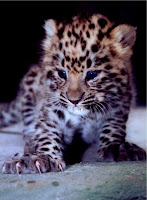 You don't really need a degree in psychology to assertain that this is a good idea (in the sense that it will work). Nobody cares about some ugly bush or spider, but by all means please save the dolphins and the koalas! In fact I've already written about this issue previously in 2010, in the post "Who Cares?". Curiously enough, that post also emerged has a response to a news from Metro. Now that I think of it, I believe those were the only two times I've seen the term fluffy being used in a newspaper.
What I want to talk about now is not that irrational concern for cute species, but rather how using those images to make people more interventive may not be as harmless as it might seem at first glance.
I'd like to start by going a bit against the generally accepted theory that it's big corporate interests, in all their greed, that are destroying the planet while we all, in our best of intentions, stand powerless against them. There are many flaws to this reasoning. First, we should never forget that these big mean corporations are ultimately working for us. Sure, we all hate oil companies and how they're careless in their handling of oil and so on. But we also get furious when fuel prices rise. Or when clothes get more expensive. We all like to act as if protecting the environment is effortless and comes with loads of advantages and no cost. But, be sure of it, protecting the environment can be very expensive sometimes. As an example, I remember this time when a professor of mine was talking about this project he'd worked on, to install some power lines in Portugal. They had this (cheap) project to make the connection through air cables but then some environment protection organisation stood against it by arguing that it would be harmful for this local bat population. The court decided in their favour, and the cables had to be installed underground. This change made the whole project cost ten times more and of course it's us, consumers, who are paying for it. Another example could be Portugal's heavy investment in renewable energies over the last years, usually loved by the crowd. Thing is, it seems that, were we not to be using any renewable energies at all, our electricity bill would be 30% cheaper. That's a huge cost, when all hell runs loose after each few percents increase. Mind that I'm not defending that we shouldn't care about the bats or using renewable energies; I'm just saying we also need to be aware of the costs of doing so.
Another critic to that line of thinking is that, nowadays, we're far from powerless. Besides changing our habits towards more environment friendly ones, we can also fight those big mean companies through public journalism, by divulging their acts. In fact, internet has made bad publicity so poweful that it's precisely the bigger companies that are most likely to make big contributions and gestures towards environment protection. Of course one can question their motives, but the result is the same.
Back to the initial theme, those fluffy animais are dangerous because they make us blind to the downsides of their (over?) protection. Of course, as the Metro news reported, they're mostly used for higher purposes, such as saving their uglier brothers and sisters. Yet this means that we're somewhat being tricked and manipulated into helping a cause. And if the purpose of any action is ill-defined or hidden, how are we supposed to make just and informed decisions? As I've already tried to demonstrate, going as green as possible might not always be the right decision.
Some might claim that environmentalists are reasonable people with good intentions and so will use this "new" persuasion technique with care, parsiomony and responsibility. Still, as we all know, the road to hell is paved with good intentions. Moreover, focusiing all important decision making in some enlightened few is both dangerous (everyone is wrong sometimes) and dictatorship like.
Other possible argument in defense of this behaviour is that our consumer habits and lifestyles have led us so far from being green that, even if we turn the meter as far as we can on the other direction, we still wouldn't be too green. Perhaps. Problem is, in all arguments, it's the most fanatic who make the most noise.
In the end, I guess we'll have to hope that reason and good sense will prevail over sensacionalism, both amonst environmentalists and ourselves.
Filipe Baptista de Morais
 You don't really need a degree in psychology to assertain that this is a good idea (in the sense that it will work). Nobody cares about some ugly bush or spider, but by all means please save the dolphins and the koalas! In fact I've already written about this issue previously in 2010, in the post "Who Cares?". Curiously enough, that post also emerged has a response to a news from Metro. Now that I think of it, I believe those were the only two times I've seen the term fluffy being used in a newspaper.
What I want to talk about now is not that irrational concern for cute species, but rather how using those images to make people more interventive may not be as harmless as it might seem at first glance.
I'd like to start by going a bit against the generally accepted theory that it's big corporate interests, in all their greed, that are destroying the planet while we all, in our best of intentions, stand powerless against them. There are many flaws to this reasoning. First, we should never forget that these big mean corporations are ultimately working for us. Sure, we all hate oil companies and how they're careless in their handling of oil and so on. But we also get furious when fuel prices rise. Or when clothes get more expensive. We all like to act as if protecting the environment is effortless and comes with loads of advantages and no cost. But, be sure of it, protecting the environment can be very expensive sometimes. As an example, I remember this time when a professor of mine was talking about this project he'd worked on, to install some power lines in Portugal. They had this (cheap) project to make the connection through air cables but then some environment protection organisation stood against it by arguing that it would be harmful for this local bat population. The court decided in their favour, and the cables had to be installed underground. This change made the whole project cost ten times more and of course it's us, consumers, who are paying for it. Another example could be Portugal's heavy investment in renewable energies over the last years, usually loved by the crowd. Thing is, it seems that, were we not to be using any renewable energies at all, our electricity bill would be 30% cheaper. That's a huge cost, when all hell runs loose after each few percents increase. Mind that I'm not defending that we shouldn't care about the bats or using renewable energies; I'm just saying we also need to be aware of the costs of doing so.
Another critic to that line of thinking is that, nowadays, we're far from powerless. Besides changing our habits towards more environment friendly ones, we can also fight those big mean companies through public journalism, by divulging their acts. In fact, internet has made bad publicity so poweful that it's precisely the bigger companies that are most likely to make big contributions and gestures towards environment protection. Of course one can question their motives, but the result is the same.
Back to the initial theme, those fluffy animais are dangerous because they make us blind to the downsides of their (over?) protection. Of course, as the Metro news reported, they're mostly used for higher purposes, such as saving their uglier brothers and sisters. Yet this means that we're somewhat being tricked and manipulated into helping a cause. And if the purpose of any action is ill-defined or hidden, how are we supposed to make just and informed decisions? As I've already tried to demonstrate, going as green as possible might not always be the right decision.
Some might claim that environmentalists are reasonable people with good intentions and so will use this "new" persuasion technique with care, parsiomony and responsibility. Still, as we all know, the road to hell is paved with good intentions. Moreover, focusiing all important decision making in some enlightened few is both dangerous (everyone is wrong sometimes) and dictatorship like.
Other possible argument in defense of this behaviour is that our consumer habits and lifestyles have led us so far from being green that, even if we turn the meter as far as we can on the other direction, we still wouldn't be too green. Perhaps. Problem is, in all arguments, it's the most fanatic who make the most noise.
In the end, I guess we'll have to hope that reason and good sense will prevail over sensacionalism, both amonst environmentalists and ourselves.
Filipe Baptista de Morais
segunda-feira, 1 de abril de 2013
It's in Belgium
A couple of
weeks ago I travelled to Belgium for a long weekend. Now, Belgium is quite a
small country so it’s amazing the amount of stuff you can do in four days. In
terms of prices, things are quite expensive (for Portuguese standards); staying
over at a friend’s ensured the trip remained within budged.
Food is
pretty good in Belgium, with the ever-present exception of coffee. Still,
Belgian waffles and chocolate certainly help overcome that. Especially when you
put them together. There’s also beer for every taste, so it’s (almost)
impossible not to enjoy one.
It’s hard
to judge the weather from a four days sample, but I hear it’s quite awful. Can’t
really complain though, since it never rained during my stay (though it snowed
quite a lot). Nevertheless, the sun does not seem to shine the same way it does
in Portugal. Yep, you should definitely come here.
In what
regards Belgian people, I’m afraid I didn’t find them very friendly. Helpful,
certainly, but not really friendly. Could have been just a stream of bad luck
though.
Despite not
having a government for quite some time, things appear to run pretty smooth in
Belgium. Of course when you come from Portugal every other place seems to
display military-like organization. I recall using this software tool for train
travels planning, available at their public transports’ (which are quite cheap
by the way) website. I loved it so much that I made some nice comments about it
to my Belgian friends. Of course 15 minutes after that I was boarding the wrong
train, which ultimately led to my arrival in Brussels two hours after schedule
and forced me to take a cab. Irony’s a bitch. I first thought I’d messed up
somehow (I really didn’t want to blame that neat software tool), but I happened
to meet some nice Czech women (psychologists attending some international
conference, though they seemed more interested in partying) who had made
exactly the same mistake. Guess I should thank the most nice and helpful (and
gorgeous) ticket lady, for sorting everything out and letting me ride back to
Leuven when the train was not supposed to be carrying passengers anymore.
Having
given my overall impression on Belgium,
I’ll now write a few lines about each city/town that I’ve visited, in
chronological order.
Antwerp. I
wasn’t really sure what to expect from Antwerp, since opinions seemed to
diverge a lot. Now I can testify that it’s definitely worth seeing. The city
pulses with movement and has this very modern appeal, while retaining some old
beautiful buildings and its famous Cathedral of Our Lady. The city park
(Stradspark), is also very pretty as is the square featuring the city hall and
the statue of Brabo, founder of Antwerp. The area near the harbour is a must,
and no tourist should pass by the MAS museum without going in. 1€ is all it
takes to get access to eleven floors dedicated to an equal number of different
and interesting themes, as well as a panoramic view over the city. Not far from
it there’s a memorial to the deceased in both World Wars. Right next to it the
sharp eyed reader will find a lovers’ heart (kinda like a lovers’ bridge, but
instead of a bridged you have a heart). Most unfortunately, I didn’t have time to visit the castle, also
along the coast line. You’ll also find an amazingly high number of gay couples
(mostly men) in Antwerp. Which, if you take into account that Antwerpian women
are quite beautiful, should make it some kind of paradise for straight single
men: odds are the city’s full of gorgeous and lonely women!
Leuven. I’d never heard great things about
Leuven, so I only went there in order to visit a handful of friends. True enough, the city lacks touristic
attractions at level with the others’. Still, Leuven has this distinct and particular
appeal. Perhaps because it’s mostly a students’ town, one really does feel “right”
in there. The bars area is pretty nice, and it features the longest (combined)
balcony in Europe. Though I did not have time to go there since it’s in the
outskirts, the area around the faculty of biological engineering seemed quite
nice. Bikes (and people riding them) all over the place also help establish
that cozy feeling of belonging.
Bruges (It’s
in Belgium). Just a few days before departing to Belgium I saw this movie, “In
Bruges”,

Gent. The city is quite similar to Bruges in its medieval look. In terms of interiors it may even be prettier: it features plenty of beautiful churches to see. It also had more canals than Bruges. Still, something's missing... perhaps that eerie mist that makes everything look so surreal. The castle is a real wonder, and you can climb all the way up and walk along the wals: you'll be rewarded with quite the view. It also has a Belfry, but I didn't go up that one.
Tervuren. It's a really small town just outside Brussels. I didn't really go into the town, just the Royal Museum for Central Africa which is its main attraction. The weather didn't allow us to walk along its gardens, but the palace itself is quite pretty. Inside, you can learn a lot about Central Africa, Congo in particular. It has replicas of many of the existing wild life. It's also a great place to find different kinds of souvenirs.
Brussels. I must say I was very disappointed with something in Brussels... it's really hard to find someone who speaks (proper) English! I'd always been told that Brussels was an international city, the heart and capital of Europe, so that was definitely a turndown. Apart from that, I really liked the capital of Belgium The Grànd Place is amazing: you don't really know where to look since there are interesting buildings all around. The comic strips painted on the facades make a perfect excuse for walking all around the city; you can get a map with their positions and try to find and photograph them all. Sightseeing turns into some kind of amusing quest! It took me around six hours (I only had a short lunch break, but it was snowing heavily so that slowed me down) and still I missed some of them. The city parks are beautiful when covered with snow. The Manneken Pis, often used as a symbol of the city, was rather disappointing, even though I'd already been warned. It's funny how something can disappoint us, despite the fact that we're already expecting to be disappointed. Guess one can't truly expect to be let down... By the way, did you know there are two other pissing statues in Brussels, portrating a girls and a dog? You can find chocolate shops all over the place; there's the big brands (Leonidas, Cote d'Or, etc... ) , of course, but I found it far more interesting to stumble into these small artisan shops and buy, say, a chocolate train. Finally, I'd definitely recomment visiting the Parlamentarium, the visitors' centre for the European Parliament. You'll need some time though: I spent around two hours in there and still half of it was left unseen.
Filipe Baptista de Morais
quarta-feira, 27 de março de 2013
Triste
Não o posso assegurar com certeza ( na verdade até poderia, mas pareço padecer da preguiça crónica de que tantas vezes nós Portugueses somos acusados ) mas penso que estou a abrir um precedente ao publicar dois posts no mesmo dia.
Queria fazer apenas um muito curto comentário à entrevista a José Sócrates que acabou de ter lugar. Este não é um blog sobre política, pelo que não vou comentar o seu regresso nem as suas opiniões. Apenas gostava de chamar a atenção para isto. Sucessivamente durante a entrevista os jornalistas forçaram a mudança de tema, não adensando temas ( e até frequentemente cortando a palavra do ex-PM ) tão importantes como o sejam as PPP e o comportamento da dívida pública do longo dos anos. No final, terminaram a entrevista com duas questões, para as quais aparentemente tinham de guardar tempo em detrimento de outros temas menos importantes:
Filipe Baptista de Morais
Queria fazer apenas um muito curto comentário à entrevista a José Sócrates que acabou de ter lugar. Este não é um blog sobre política, pelo que não vou comentar o seu regresso nem as suas opiniões. Apenas gostava de chamar a atenção para isto. Sucessivamente durante a entrevista os jornalistas forçaram a mudança de tema, não adensando temas ( e até frequentemente cortando a palavra do ex-PM ) tão importantes como o sejam as PPP e o comportamento da dívida pública do longo dos anos. No final, terminaram a entrevista com duas questões, para as quais aparentemente tinham de guardar tempo em detrimento de outros temas menos importantes:
- Porque é que foi estudar Filosofia e não Ciências Políticas?
- Quem é que deve ter medo dos seus comentários políticos?
Filipe Baptista de Morais
Subscrever:
Mensagens (Atom)
